
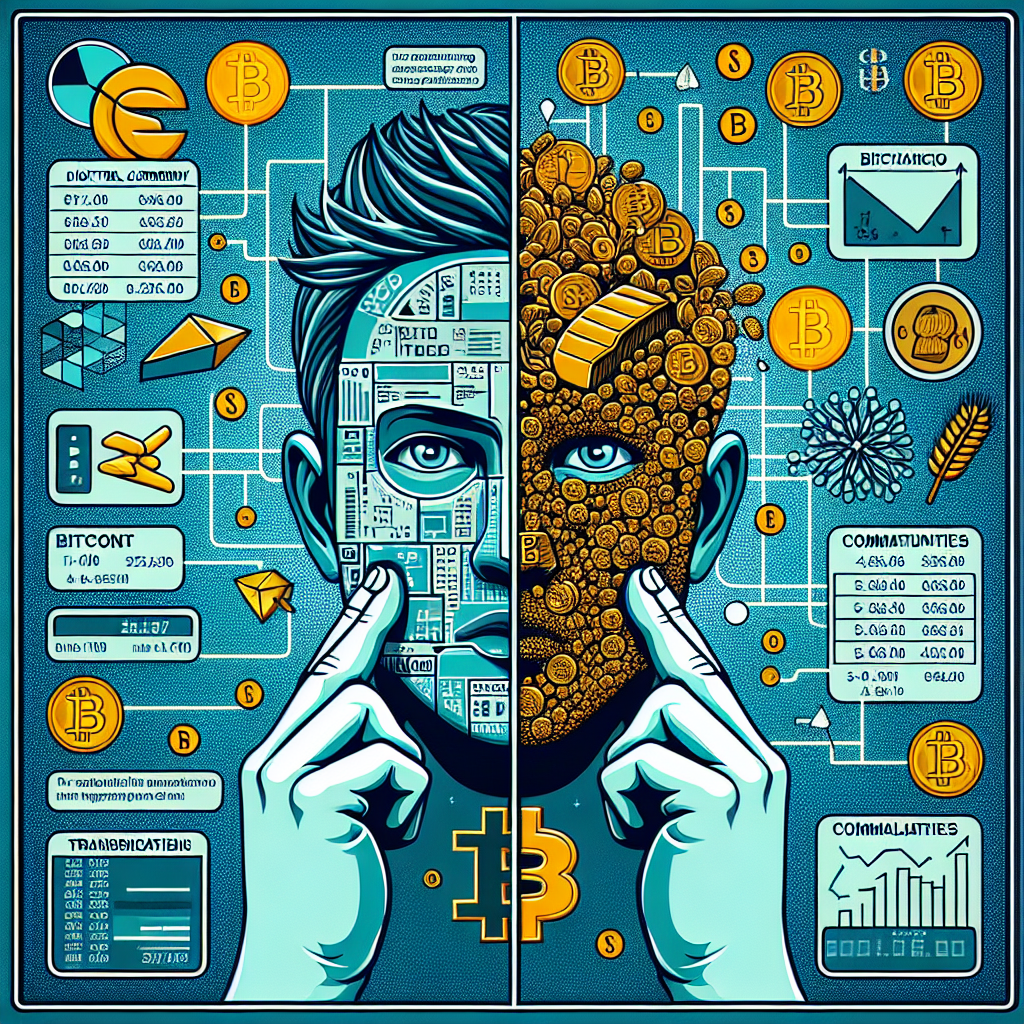

Examining Michael Saylor’s Perspective on Bitcoin as Currency or Commodity
MSN
Michael Saylor’s Perspective: Bitcoin as Money or Commodity?
Michael Saylor, the co-founder and executive chairman of MicroStrategy, has been a vocal advocate for Bitcoin since his company first invested in the cryptocurrency in 2020. His views on Bitcoin have sparked considerable debate, primarily focusing on whether Bitcoin should be classified as a form of money or as a commodity.
The Case for Bitcoin as Money
Saylor argues that Bitcoin embodies the characteristics of sound money. He emphasizes that, unlike fiat currencies, which can be printed at will by governments, Bitcoin has a capped supply of 21 million coins. This scarcity, he believes, makes Bitcoin a hedge against inflation and a superior store of value over time. Saylor points out that Bitcoin’s decentralized nature protects it from government interference, further aligning it with the principles of sound money.
Proponents of Bitcoin as money argue that it can serve as a medium of exchange in the digital economy. With increasing acceptance among merchants and the rise of payment processors that facilitate Bitcoin transactions, Saylor argues that Bitcoin is becoming more practical for everyday use. The growing number of platforms that allow users to transact in Bitcoin brings it closer to functioning as a currency.
Bitcoin as a Commodity
On the other hand, some analysts categorize Bitcoin as a commodity, similar to gold or oil. This classification stems from the fact that Bitcoin is mined and has intrinsic value derived from its utility and demand. Advocates for this viewpoint argue that Bitcoin’s primary role is as a store of value rather than a means of exchange. They highlight the volatility in Bitcoin’s price, which can make it less reliable as a currency for day-to-day transactions.
Saylor acknowledges this perspective but counters that the ultimate goal of Bitcoin is to transition to a stable currency-like role as its adoption grows. He believes that the current volatility is a natural part of its maturation process and that as Bitcoin becomes more widely adopted, its price will stabilize, paving the way for increased usability as money.
The Broader Implications for Investors
Saylor’s thesis on Bitcoin has significant implications for investors. His belief in Bitcoin as sound money has led MicroStrategy to hold substantial amounts of Bitcoin on its balance sheet, viewing it as a long-term investment strategy. This approach has inspired other corporations and institutional investors to consider Bitcoin as a potential asset class.
The ongoing debate around Bitcoin’s classification also affects regulatory perspectives. Governments are increasingly looking into how to classify and regulate cryptocurrencies, which could impact their future adoption and use. A clearer regulatory framework may help to solidify Bitcoin’s status, whether as money or a commodity.
Conclusion
Michael Saylor’s thesis on Bitcoin encapsulates a broader conversation about the future of finance and the role of decentralized currencies. As Bitcoin continues to evolve and gain traction, the discussions surrounding its classification as money or commodity will likely persist. For investors and enthusiasts alike, understanding these nuances is crucial as the landscape of cryptocurrency continues to change.
As Bitcoin’s journey unfolds, it remains imperative to stay informed about its implications for the global economy, investment strategies, and regulatory considerations.